Engineering
Software development, synthesis coding, and DevOps
96 articlesBuilding Shared Platforms for Distinctive Media Brands
How media leaders can build shared platforms, preserve distinctive brands, choose common capabilities, and earn adoption through product and staffing decisions.
Preserve publication timestamps without changing an article's calendar date
Preserve the instant in article metadata while keeping the authored day in routes and labels. A JavaScript example covers offsets, feeds and legacy dates.
Testing a Codex skill: when it runs and what it produces
Test a Codex skill with explicit, implicit, contextual, and negative prompts, then grade its output against a concrete rubric with checked examples and limits.
Checking a ChatGPT research report against its sources
Check a ChatGPT research report by matching consequential claims to primary sources, preserving conditions, and testing what its recommendation depends on.
Hook configuration: three probes and a trust check
Three historical hook configurations show how diagnostics guide the next experiment, with both workspace trust and the captured result checked separately.
Testing an installed plugin after its hooks run
A Python bytecode failure shows how to test an installed plugin after hook execution, while checking package integrity and application results separately.
Multiple folders in Codex: choosing the primary folder
Choose a Codex project's primary folder deliberately, map Git and instruction defaults, and check folder access before a change spans multiple repositories.
The Action Sheet: one page for everything your AI agents still need you to do
The decision packet's companion: after AI agents act on your rulings, one page shows what's done, what waits for your approval, and what's left for you, with th
Prepare a checkable handoff from ChatGPT Work to Codex
Prepare a ChatGPT Work task for Codex with a checked input folder, accepted decisions and executable expected results. Run the local example before adapting it.
Checking a Release Across AI Clients
Trace a release through its client inventory, installed files and running sessions, using a real missed client and a workbook that keeps each result distinct.
Turning a Failed Code Review into Tests and Repairs
A failed AI code review becomes a practical method for turning concrete findings into regression tests, repairs and a rereview with clearly stated limits.
Two vendors, one standard: running a real upgrade with synthesis engineering
An upgrade with Claude and Codex exposed a disabled safeguard and an invisible project record. The repairs show how to test the workflow that actually runs.

The Decision Packet: batching AI agents' questions without rubber-stamping them
Batch AI agents' questions into one clear review page, preserve exceptions and deliberate choices, and keep each answer tied to its evidence and authority.
“Not found” is not “does not exist”
Check “not found” with bounded search, positive controls and complete output. A withdrawn-draft case separates editorial status from deployment history.
I cut my agent’s instruction file by 62% and kept every rule
How I cut an agent instruction file from 54,825 to 21,026 bytes while preserving its rules, with a migration method and a workbook for checking their new homes.
Why I built synthesis engineering to work across AI runtimes
Why synthesis engineering separates model, runtime and state portability, preserving native strengths while keeping projects and methods under your control.
My design record ruled out agent-to-agent messaging. Six days later I shipped it.
I documented why session-to-session agent messaging would fail, then built it six days later. Why a design record is not a constraint, and what actually is.
A green config is not a working agent
Check source, installation, live behavior, continuity and capability. Use native client adapters and shared outcome tests to earn trust in an AI environment.
What My Checks Missed After an AI Agent Deleted 474 Files
My first checks of a bookmark cleanup passed. A second extraction found 196 missing URLs. The case shows how to check preservation against the source inventory.
When a Commit Guard Cannot Run, It Must Block
A missing Python dependency let my commit guard pass without scanning. Distinguish clean results from broken checks, test exceptions and monitor guard health.
I told a sub-agent to check before committing. Minutes later, I didn't.
Three multi-agent coding incidents taught me to inspect the shared Git index, write concrete briefs, and keep untested claims visible through every handoff.
Your AI assistant’s memory should belong to you
Check whether AI memory survives a change of tool or machine, using my 35-file audit and a practical handoff test for a durable, versioned project record.
I built a validator for Google’s Open Knowledge Format
Check an OKF v0.1 bundle against its specification, distinguish checker coverage from conformance, and preserve knowledge and navigation during conversion.
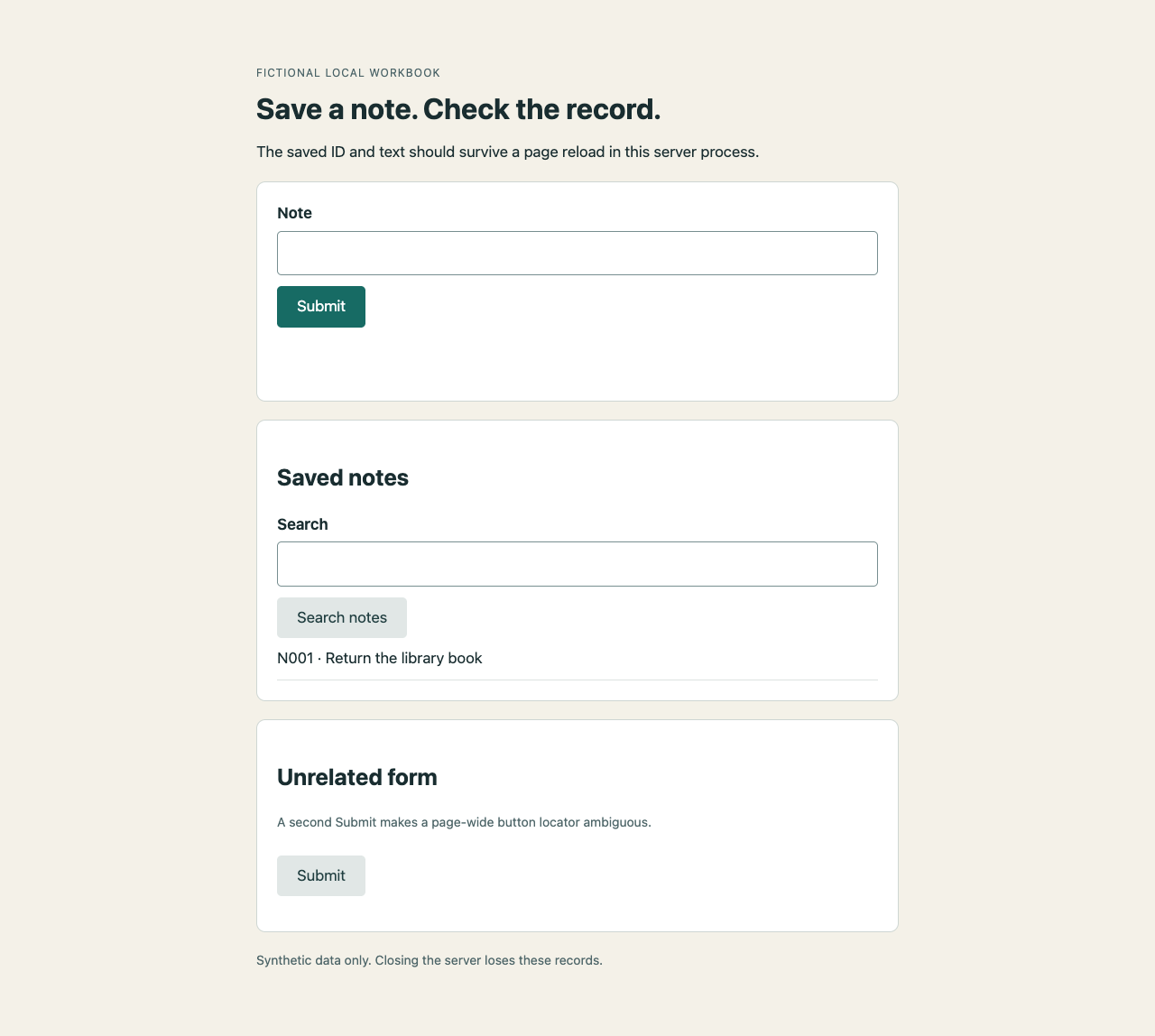
Your Coding Agent Should Watch Its Own Work Run
Use authorized browser actions, screenshots and state checks to test a coding change in the running app, keeping visual and behavioral evidence distinct.
Prompt discipline is engineering infrastructure
Prompt discipline is engineering infrastructure: a forbidden-phrase catalog, hooks, and enforcement that catch AI coding agents dressing shortcuts as judgment.
The architecture of an open-source slop detector
How Slopcheck combines analysis planning, hosted controls and shared routing for a free public tool, with source tests of cost, data and enforcement boundaries.
One context file carried a redesign across eight AI sessions
A single CONTEXT.md carried an editor redesign across eight AI coding sessions. The ownership split that made it work: humans direct, the AI keeps the record.

Three Ragbot releases, one architectural shift
How Ragbot’s three releases joined local models, tools, skills, memory and policy into a conversational runtime, with the engineering choices behind the shift.
Every bug report is now a patch-or-redesign decision
The minimal patch is a habit from when understanding was expensive. AI coding agents ended that economy, and most of us never consciously make the choice.
Checking sitemaps and canonical URLs after a site migration
A sitemap mismatch led me to audit three migrated sites. Check URL coverage, canonical targets and the release path that must stop when those checks fail.
Postel's Law for AI-Written Documents
Three bugs in my daily-plan dashboard led to shared vocabulary and tolerant rendering. The case shows where strict contracts belong and how to check both sides.
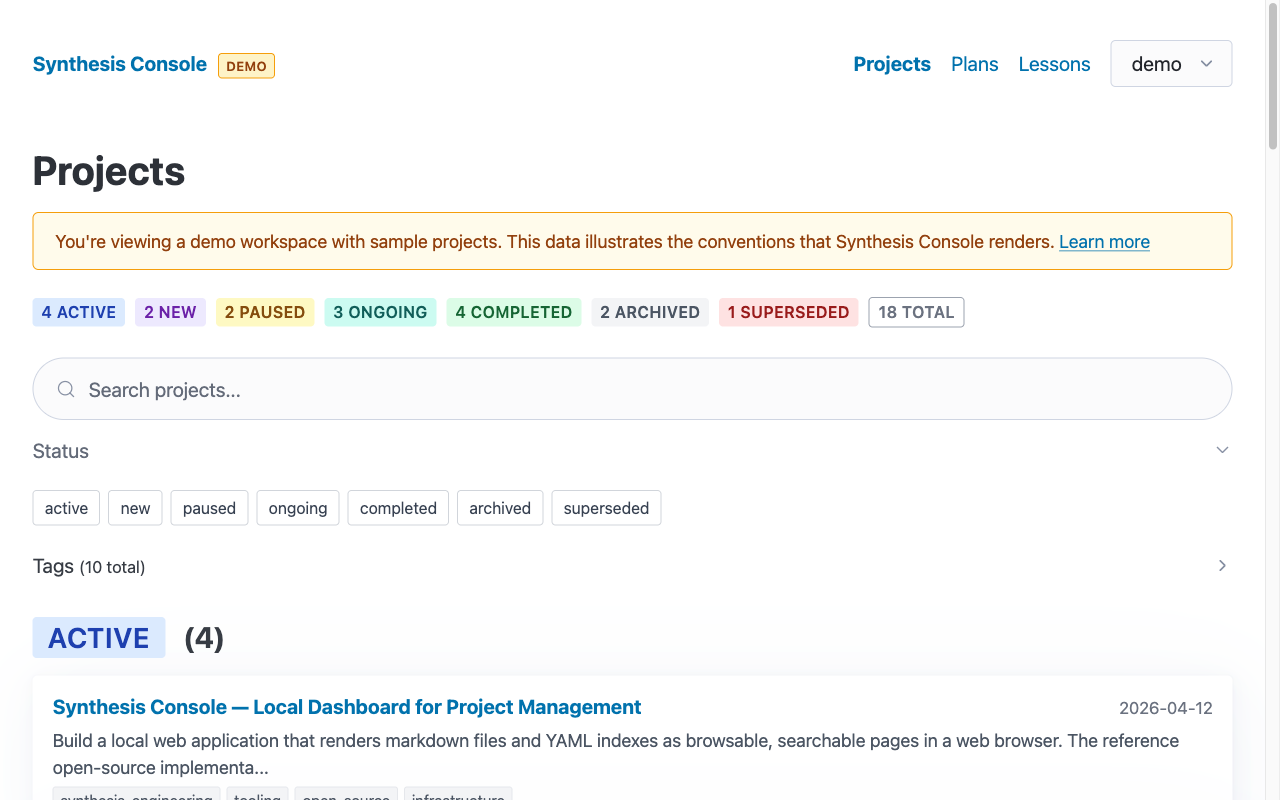
Demo mode as a pattern for software
Build demo mode into software so users can explore it with realistic sample data. A console case shows the design, testing, privacy and onboarding choices.
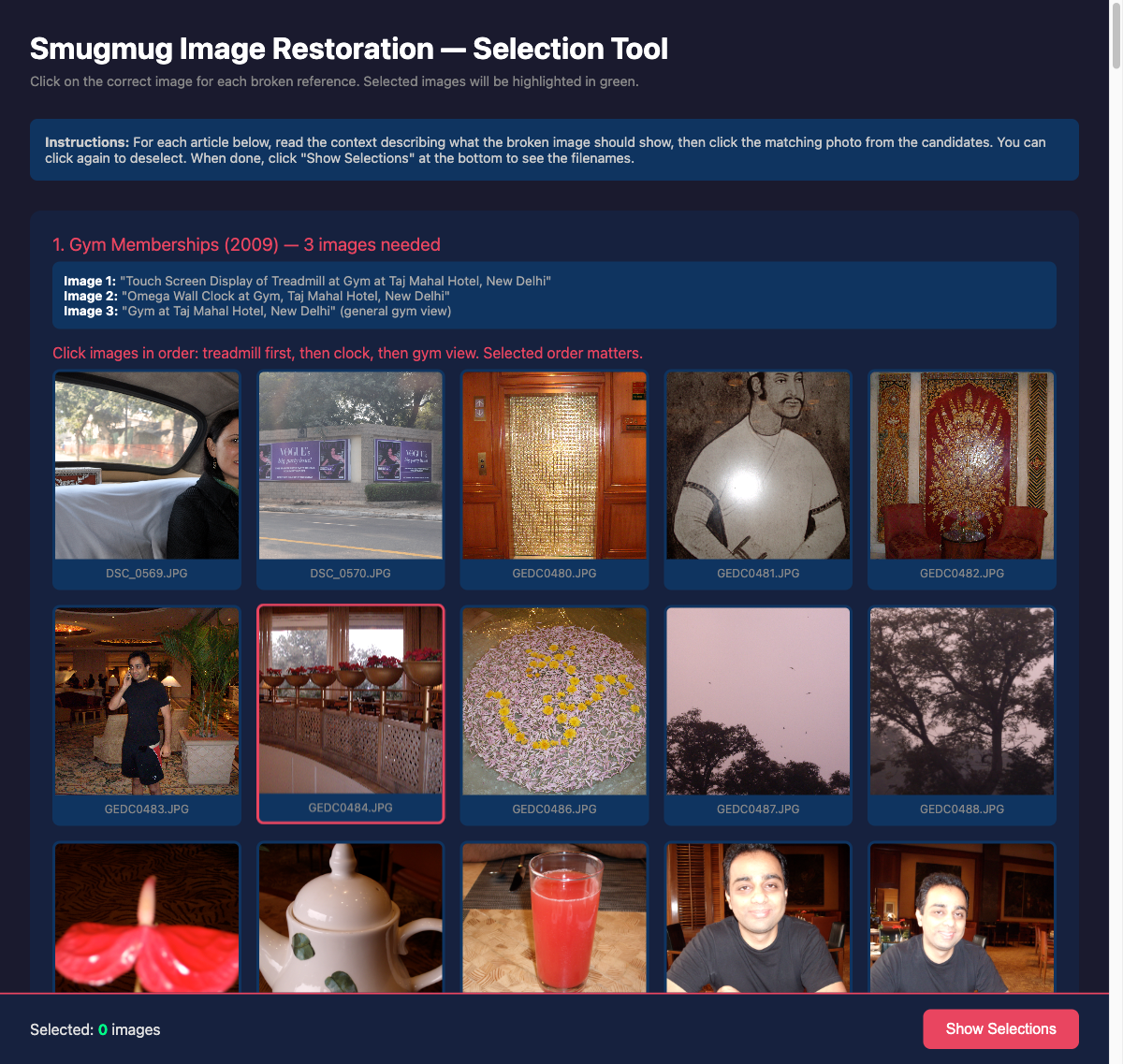
Restoring 16 Broken Blog Images Using AI, the Wayback Machine, and a 93GB Photo Backup
How I used Claude Code, the Wayback Machine, and AI vision to restore 16 broken images from a decommissioned Smugmug photo hosting service across 10 blog posts.

Synthesis Console: open-source tooling for synthesis engineering
I built a local console for projects, lessons and daily plans. File conventions, a small dependency budget and portable configuration shape its architecture.
Transferable Knowledge: The Fifth Pillar of Synthesis Coding
Transferable Knowledge makes AI-assisted work useful across people, tools, crafts, time and organizations through shared decisions and maintainable code.
When All Tests Pass, Check the Whole Change
A missing field survived 1,297 passing tests. Trace it from request to database, check each service and use seven review passes to find incomplete changes.
Stop asking me: Claude Code permissions for authorized work
Reduce repeated prompts with a scoped Claude Code permission policy, distinguishing allowed commands, sandbox limits and actions that still need authorization.
The blast radius principle: checking targets before destructive commands
Use path checks, previews and a tested recovery plan to limit AI-generated cleanup commands, with a complete exercise that removes no files.
Managing AI agent skills at scale: a three-repo architecture
A three-repository architecture for public, private and team AI skills, with provenance, dependency boundaries and a method for merging local improvements.
Synthesis Skills: install methodology directly into your AI workflow
Install reusable Synthesis Skills for code review, writing, and project continuity, with current setup guidance and the lessons behind the original release.
Synthesis merging: what happens after the first PR
Integrate overlapping pull requests in dependency order, check the combined result, credit contributors and help the team take ownership of integration.
The Tiered Context Architecture: Managing AI Working Memory at Scale
Organize AI project memory into active work, reference and history, with a worked migration, recovery checks and a practical path toward compiled context.
Turning code review findings into a tested upgrade plan
Turn code review findings into an upgrade plan that preserves domain behavior, addresses urgent risks and defines evidence for each change before work begins.
What reviewing real codebases taught me about code review
Reviewing the wrong branch led to better baselines, closer test inspection and clearer reports. See what comparisons prove, and what they leave unknown.
Recommend A, implement A: checking an AI agent’s work against the plan
Check whether AI-generated code follows the agreed plan and whether that plan meets the requirements, using filename collisions to test both independently.
When Someone Else Contributes to Your Synthesis-Coded Project
Review contributions against your current architecture, adapt what needs changing, and build the shared standards that let good work merge with less rework.
Verifying AI-Written Code with Independent Checks
Use independent expectations, parser comparisons, staged probes and reviewed dry runs to find mistakes in AI-written code before acting on its output.
Bidirectional Learning in Synthesis Coding: When Human and AI Teach Each Other
Bidirectional learning in synthesis coding: humans teach AI through context, prompts, and review; AI teaches back by surfacing blind spots and edge cases.
Code Review That Scales: Choosing Review Depth by Risk
Use a tiered code-review runbook to choose review depth, override the tier for consequential risks, and record what was checked, excluded or left unverified.
What Agent Engineering and Synthesis Engineering Share
LangChain's agent engineering and my synthesis engineering framework share a production discipline. A support-agent example shows how to use them together.
Data Format Contracts for AI Pipelines
Timestamp, pagination, rate-limit and configuration failures taught me to define explicit data contracts, then test what each component sends and accepts.
Build the Foundation Before Scaling AI Coding
Set architectural direction, build a complete reference feature and test the next addition. A worked API example shows what coding agents should extend.
Synthesis Engineering: Organizing Complex Work with AI
A discipline for organizing complex work with AI: define results, assign responsibility, check outcomes and preserve decisions, with a worked software example.
What OpenAI's Sora Build Teaches Us About Synthesis Coding
What OpenAI's Sora Android case teaches about synthesis coding: give agents context, establish patterns, plan changes, and lead the work as it scales.
Building ownwords: A Synthesis Coding Case Study
How I built ownwords to manage 53 articles in Markdown, with deliberate architecture, publishing checks and runnable conversion and permission examples.
Vibe Coding and Synthesis Coding: Two Complementary Approaches
Use conversational exploration to test ideas and synthesis coding to build software people can depend on, with practical guidance for moving between the two.
Polyrepo Synthesis: Working Across Repositories with Claude Code and VS Code
Configure Claude Code and VS Code for cross-repository work, map shared dependencies, and test both direct and indexed consumers after a schema change.
Modernizing a 17-Year-Old WordPress Plugin with Claude Code
A 2025 modernization of Blogroll Links: WordPress security and compatibility work with Claude Code, and why maintaining open-web software still matters.
Build a self-improving AI coding practice
Improve AI coding through project context, skills, instructions, and practice. A team account and CSV exercise show how to carry useful lessons into later work.
Understanding the AI-generated code you ship
Understand AI-generated code well enough to debug and change it. A cache example connects comprehension, review, and tests to sustained development speed.
Quality standards for AI-generated code
Design a testing strategy, review generated code, and connect passing checks to real requirements. An empty-response example shows how a green suite can fail.
Human architectural authority in AI-assisted development
How engineers keep AI-assisted development coherent: own architectural decisions, record their rationale, and use shared constraints to reduce costly rework.
Reviewing Claude Code’s Work: Security and Performance
Four Claude Code cases show how engineering review improves authentication, caching, async calls, and security findings, with runnable local Python examples.
Synthesis coding: a professional practice for AI-assisted development
Architectural judgment, systematic quality, and shared project knowledge make AI-assisted development a professional practice with lasting value for teams.
What Open Source Taught Me About Building Innovation
Why I bet on open source: four habits that help projects compound, the leadership behind shared maintenance, and what AI changes about contributing code.

Daily Team Sync: AI prompts for human conversations
I built Daily Team Sync to generate Slack check-in prompts and personal reminders, drawing on newsroom experience to help distributed teams communicate.
MatheMagic Card Trick
Try the number-revealing card trick my son Fitz and I built in JavaScript, with printable cards, performance instructions, source code, and a worked example.
Tim Berners-Lee and the web I still want
A conversation with Tim Berners-Lee renewed my belief in an open web. Solid gives that ambition a practical form, with consequences for readers and journalism.
What I learned building products in twelve weeks at Thrive Global
Thrive Global's twelve-week launch taught me how mission, scope and a capable partner guide product choices, early learning and long-term maintenance.

Thrive Global’s 12-week launch: Very’s account
Very shares how we designed, built, and launched Thrive Global’s mobile, web, and voice products in 12 weeks, with a case study of our development partnership.
What publishing platforms should share
Share publishing capabilities while preserving each product's editorial purpose. Explore image crops, story ranking, team boundaries and where complexity lives.
Designing a news site around its stories
The New York Times redesign shows how different stories can share a coherent reading experience without forcing every page into the same layout or software.
SHA-3 hash generator: original Keccak
Generate the original Keccak hashes in this 2013 SHA-3 tool, with 224, 256, 384, or 512-bit output, and understand which algorithm the calculator implements.

Maintenance versus new development: budgeting for both
How to distinguish maintenance from new development, budget for both, define vendor responsibilities, and protect the value of existing digital products.

Using Amazon EBS with EC2: Persistent Storage
A 2009 EBS guide explains persistent EC2 data, volume setup and migration, with a safe directory-copy exercise and a dated note on shared-volume limitations.
XMUltra and the Work of Connecting Newspaper Systems
XMUltra connected newspaper feeds through shared processing. Its design shows why format mapping, operational care and editorial agreement belong together.
Blogroll Links: Bringing the Open Social Graph to WordPress
How my Blogroll Links plugin uses WordPress links and XFN relationships to display friends, charities and other lists, with the original examples and code.
Shared software for independent newsrooms
Shared software can strengthen local newsrooms. COXnet’s photo, feed and release work shows how common infrastructure can protect local control and build trust.
What Newspapers Taught Me About Deadlines
Newspaper deadlines taught me to build delivery habits, decide what readers need on time, and treat a fixed launch as a promise that reaches beyond the team.
Why newsroom software needs editorial judgment
Newsroom software shapes editorial decisions. Examine changing copy, reporter metrics and source protection to build tools that serve the work of journalism.
What teaching journalism students taught me
A visit to Medill showed me what journalism students needed from technologists: room to question their tools, choose uncertain careers, and teach us in return.
Search should remember where you were browsing
PhillyFinder shows how directory categories can carry a reader's choices into full-text search, while keeping the search boundary visible and easy to change.
Building Cofax: A Content Management System for Newspapers
Building Cofax at Philadelphia Newspapers: the people, newsroom needs and design choices behind a shared publishing system that left local editors in control.
What a web server can tell you without sending a page
A Perl CGI asks a web server for its headers without downloading the page. What HTTP's HEAD request reveals, and why the reply is a report rather than proof.
Converting Numbers to Words in Perl
A Perl module for spelling numbers in English, with source code, grouping examples, practical uses, and plans for Indian English and words-to-number conversion.
Sending Mail from Java Programs
A Java SMTP class for web-form notifications, with Java and ASP examples, complete source code, and the mail workflow I used at Philadelphia Newspapers.
Including Remote HTML in Web Pages
A Java component for including remote HTML in web pages, with rich ad-serving examples, ASP integration, complete source, and reuse across server environments.
Multiple Default Documents on IIS
An ASP workaround for mixed default-document names on IIS, including the original source, its file-selection behavior and the response from web administrators.
Making Unix Web Servers Case-Insensitive
Two Perl scripts for recovering miscapitalized URLs on Unix servers, with a DBM lookup, helpful error messages and the complete original newspaper-site code.
A Date and Time Package for Perl
A Perl 5 date-formatting package, with working constructor examples, the original source, and practical reuse in the tools I built for newspaper web sites.
A Tour Guide Applet for Web Sites
A Java applet for guiding visitors through a site, with editable tour data, a persistent popup window and the complete original source for other web builders.
A toHex Function for Java
A Java function to convert non-negative integers to hexadecimal strings, written when java.lang.Integer lacked toHexString().
Netscape Acknowledged My Directory Listing Script
Netscape published my Perl CGI for custom directory listings as Tech Note 20021, solving a gap in their server software.
Building an Ad System for a Newspaper Web Site
The Perl click tracker and ad-rotation scripts I built for Philadelphia Newspapers, with monthly flat-file logs and reusable page templates.
Reading GIF Dimensions in Perl
A Perl function to read GIF image dimensions and generate correct HTML img tags automatically.
Splitting Files for Floppy Disks
A Perl script to split large files into floppy-disk-sized pieces for transport across unreliable connections.