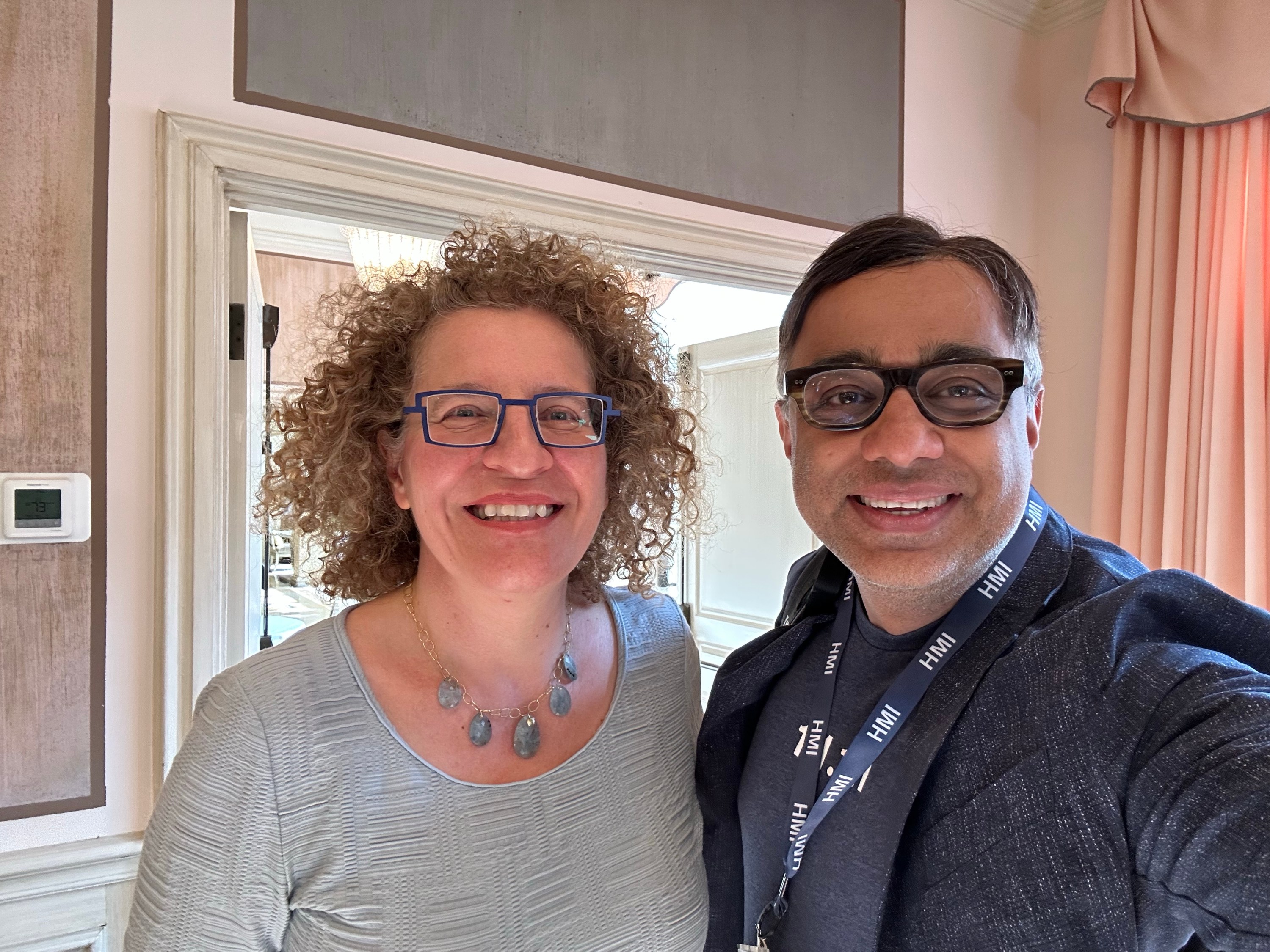
 With Professor Tiziana Casciaro at Hearst Management Institute, where she taught a class on change management. 2023 May.
I’ve studied power dynamics throughout my career, and my friend Professor Jeff Pfeffer’s work has shaped my understanding. I read “Power, for All: How It Really Works and Why It’s Everyone’s Business,” by Professors Julie Battilana and Tiziana Casciaro, while preparing for Professor Casciaro’s class at the Hearst Management Institute.
Professors Casciaro and Battilana’s work has expanded my understanding of power, supplementing the insights I have gained from Professor Pfeffer’s writings.
I strongly agree with Professor Pfeffer’s view of power and hold his work in high esteem. It has shaped how I lead. Reading Casciaro and Battilana adds another perspective to that foundation: how people can gain influence and use it responsibly for a shared benefit.
Their account starts with a practical mechanism: influence comes from access to resources other people value. They explore how people can build and use that influence responsibly. I find their positive-sum vision compelling: power can help people achieve something together, with benefits for all involved. That resonates with my experience of organizations.
In their guide to using power responsibly, I found many parallels with my professional experiences. Their exploration of ethical power mirrored my four years working as CTO at The New York Times, where the editorial and business sides, although distinct, needed to collaborate for the collective good of the organization. That balance of power, integrity and mutual respect shaped my leadership in subsequent roles at The Wall Street Journal, News Corp, McKinsey & Company and Hearst. It also fits my life’s motto: “Victory is winning people over, not defeating others.”
I see an application for their idea of democratized power in organizations like the AI startup You.com, which I have been advising since its founding. Sharing influence can challenge rigid hierarchies and give more people room to contribute, create and innovate.
Beyond the professional sphere, “Power, for All” holds personal significance for me. As a father, it aids me in teaching my son Fitz about not just power, but also the complexities of human behavior, societal structures, and empathy. These lessons are central to our shared learning experiences, and Professors Casciaro and Battilana’s book serves as a valuable tool for imparting them.
Just like my commitment to fitness, where discipline, consistency, and perseverance have driven me to work out for at least an hour daily without missing a day for over 1150 days, the pursuit of understanding power requires a similar mindset. Professors Casciaro and Battilana’s book is an essential addition to my library of resources, informing and guiding my personal and professional endeavors.
I recommend “Power, for All” to CEOs, students, engineers and parents who want to understand influence and use it responsibly. Its value is both personal and collective: gaining the power to act, then using it to make life and work better for others as well as ourselves.